

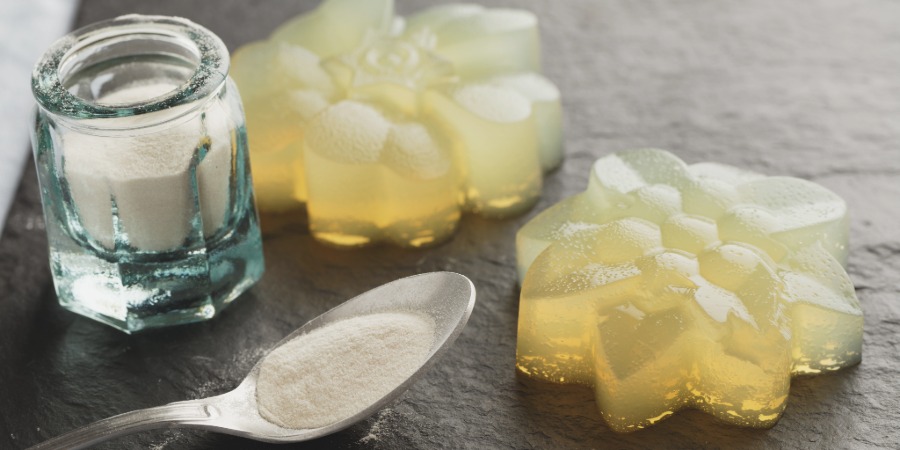
Agar-agar is a widely used ingredient in the food industry thanks to its exceptional gelling, stabilizing, and thickening properties. However, few people stop to think about the complex process behind this natural hydrocolloid obtained from red seaweed.
From harvesting the raw material to obtaining the final powder, agar-agar production combines technical expertise, industrial know-how, and strict quality control to ensure a consistent and reliable product.
It All Begins in the Ocean
Agar-agar is extracted from specific species of red seaweed known as agarophytes. These seaweeds are the essential raw material used in the production of this natural hydrocolloid, which is widely applied in food, microbiology, plant tissue culture, and other industrial sectors.
Once harvested, the seaweed is dried to prevent fermentation and allow proper storage until processing. It then undergoes a thorough cleaning process to remove sand, marine residues, and other impurities.
Agar Extraction
After cleaning, the seaweed is subjected to a controlled extraction process involving carefully regulated temperature and pressure conditions. During this stage, the agar contained within the cell walls is released into the extraction water.
The resulting solution is filtered to remove any remaining particles and then cooled to form a homogeneous gel. This step is essential to ensure the purity and quality of the final product.
From Gel to Powder
The newly formed gel still contains a high percentage of water. To concentrate the agar, most of this moisture is removed through physical processes such as freezing or pressure-assisted dehydration.
Once the water content has been significantly reduced, thin sheets traditionally known as “agar strips” are obtained. These sheets are then milled into powder and further dried until the desired moisture level is reached, ensuring product stability and shelf life.
Quality Control and Standardization
Before reaching customers, every batch of agar undergoes rigorous physicochemical testing to verify its functional properties and ensure product consistency.
Different intermediate batches may subsequently be blended to achieve the precise specifications required for each application. This standardization process is particularly important in industries where consistent performance is critical, such as food production, microbiology, and biotechnology.
A Natural Ingredient with Multiple Applications
Thanks to its unique gelling properties, thermal stability, and plant-based origin, agar-agar has become an essential ingredient in countless food formulations. It is commonly used in dairy products, confectionery, desserts, beverages, vegan foods, and many other applications where stable and reproducible texture is required.
Behind every gram of agar-agar lies a carefully controlled process that begins in the ocean and ends with a natural, safe, and high-performance ingredient for the food industry.
At Agarmex, we are committed to ensuring that every batch of agar meets the highest quality standards, providing solutions tailored to the specific needs of our customers and their formulations.